

Complex and rescue cases
Not enough bone for implants? You still have options.
Being told you don't have enough bone is rarely the end of the conversation. Here are the ways a surgeon can make implants possible.
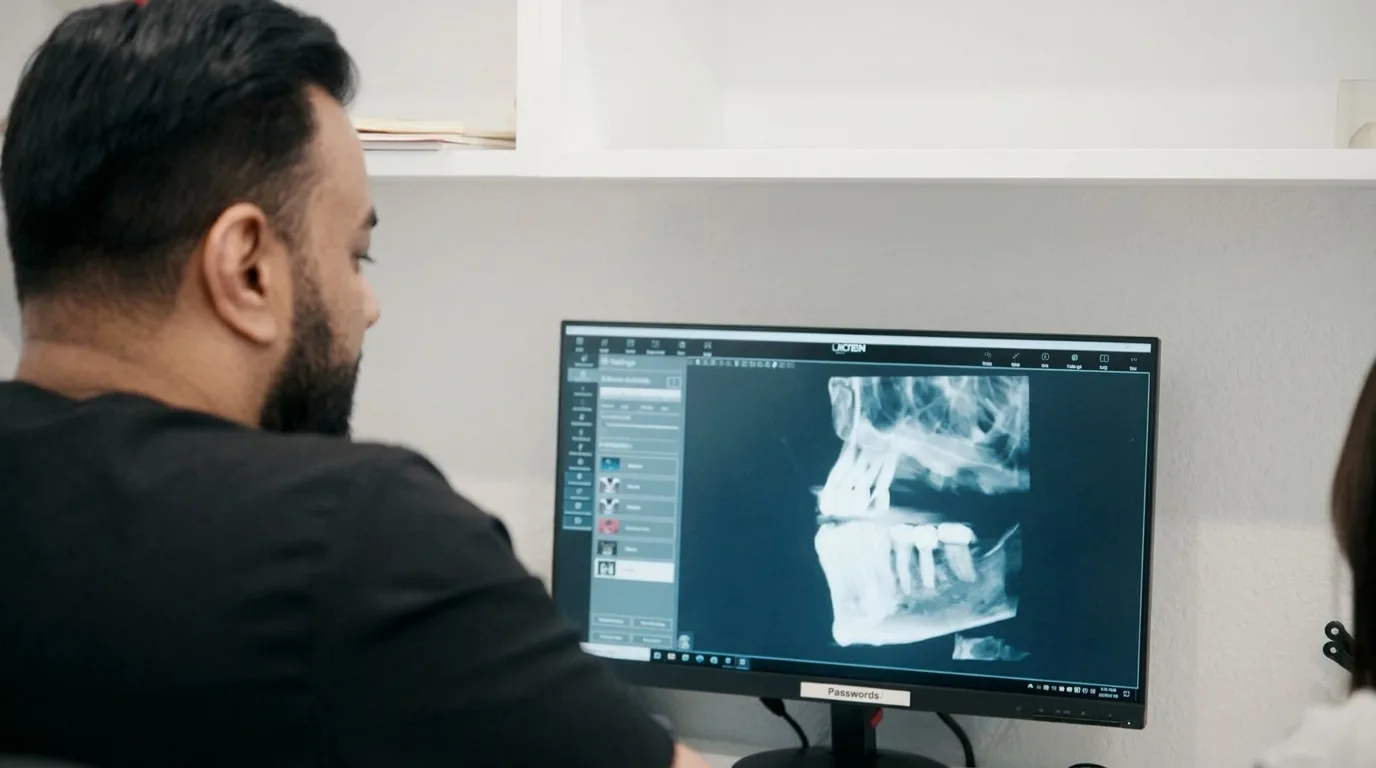
After a tooth is lost, the bone that held it slowly shrinks. Years of missing teeth, gum disease or a denture pressing on the gums can leave too little bone for a standard implant. The good news: modern implant surgery has several ways to work with, or rebuild, the bone you have.
First, measure what's there
A 3D CBCT scan shows the height, width and quality of your bone, and where the sinuses and nerves are. It's the only way to know which options are realistic for you. Two people with the same gap can need very different treatment.
Option 1: Bone grafting
Bone grafting adds bone where it's missing, so a standard implant can be placed. Small grafts are often done at the same time as the implant. Larger ones are done first and left to heal for several months.
Option 2: Sinus lift
In the upper back jaw, the sinus often expands into the space where implants would go. A sinus lift gently raises the sinus floor and places graft material beneath it, creating room for implants.
Option 3: Tilted implants (All-on-X)
For a full arch of teeth, implants can be angled to use the strongest bone and avoid the sinus or nerve. This is the idea behind All-on-4 and All-on-X, and it often avoids grafting altogether.
Option 4: Zygomatic and pterygoid implants
When the upper jaw has very little bone left, longer implants can be anchored in the cheekbone (zygomatic) or the bone behind the upper jaw (pterygoid). They make fixed teeth possible without large grafts.
Option 5: Subperiosteal implants
A custom-made framework that rests on the jawbone under the gum, designed from your CT scan. It's used for a small number of people who can't have other implants.
Which is right for you?
It depends on where the bone is missing, how much, your health, and what you'd like your new teeth to be: fixed or removable, one tooth or a full arch. Dr. Ali Mehdi will walk you through the options that suit your scans, with the time, steps and trade-offs of each.
Questions
Is bone grafting painful?
It's done under local anaesthetic or sedation. Afterwards most people describe soreness similar to a tooth extraction, which settles within a few days.
How long does it take before I can have implants?
With small grafts, implants can often go in the same day. Larger grafts usually need four to nine months to mature first. Tilted or zygomatic implants can avoid the wait.
Can bone loss be stopped?
Replacing missing teeth with implants helps preserve the bone, because the implant stimulates it as natural roots do. A denture can't.
Keep reading
Related questions
- 01Bone grafting for implantsTypes of grafts, GBR and ridge split, explained simply
- 02Sinus lift before implantsWhat it is, when it's needed, how long healing takes
- 03Zygomatic implants in BCWhen the upper jaw has too little bone for regular implants
- 04Subperiosteal implantsWhen they're still used, and who they suit
Find out what's possible for you
A consultation with Dr. Ali Mehdi starts with your scans and your goals, and ends with a clear plan you understand.