
Complex and rescue cases
Zygomatic implants: teeth again, without years of grafting
When the upper jaw has lost too much bone for regular implants, longer implants anchored in the cheekbone can often support a fixed set of teeth, sometimes within days.
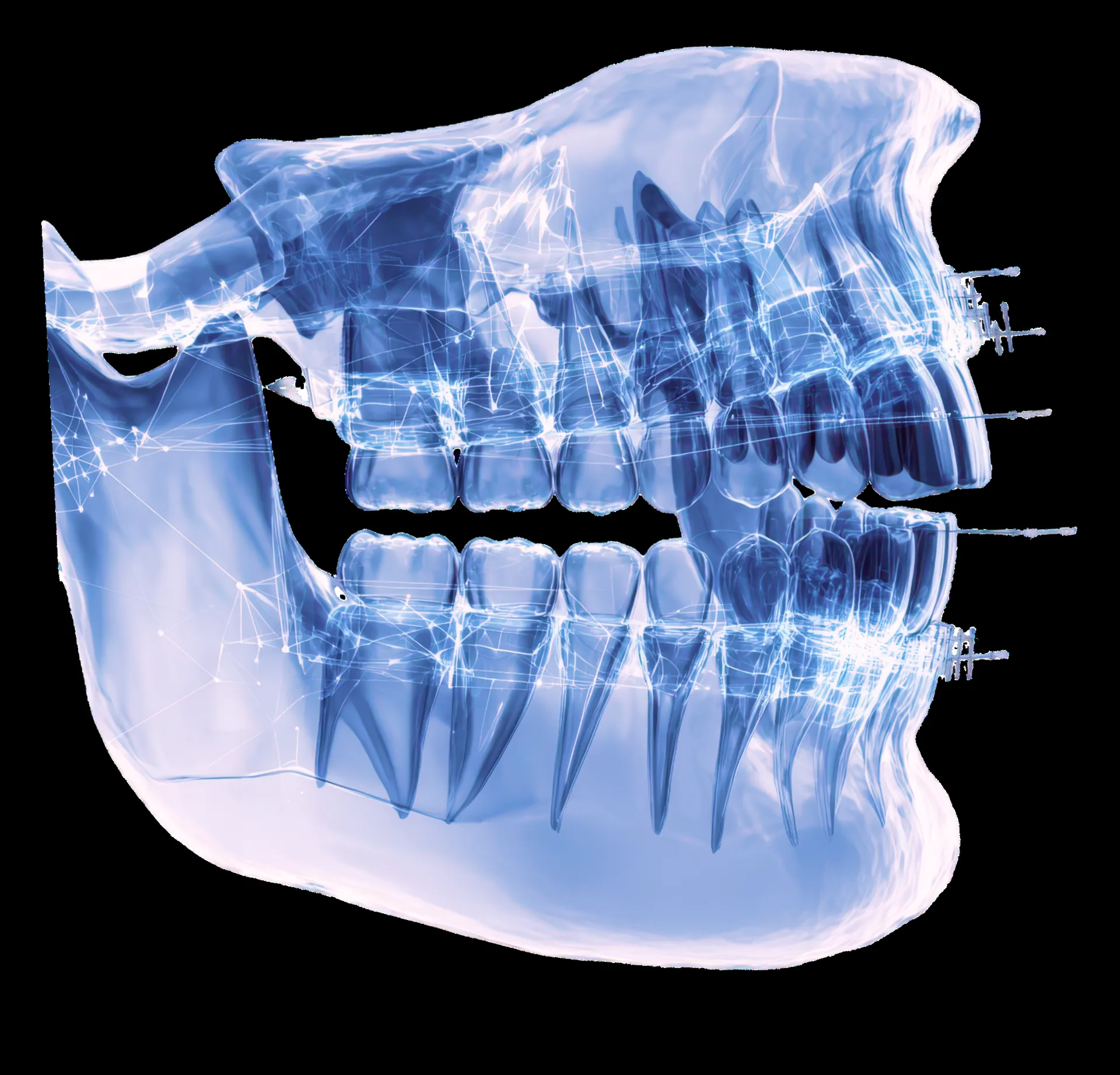
Many people with severe bone loss in the upper jaw are told they can't have implants, or that they'll need several bone grafts first, each with months of healing. Zygomatic implants are one of the ways around that.
What a zygomatic implant is
A zygomatic implant is a longer implant that passes from the upper jaw into the zygoma, the cheekbone. The cheekbone is dense and stays strong even when the bone that once held the upper teeth has worn away. Anchoring there gives a stable foundation for a full set of fixed teeth.
They're usually combined with regular implants at the front of the jaw, or used two on each side (a "quad zygoma") when there's very little bone anywhere in the upper jaw.
Who they're for
- People with severe bone loss in the upper jaw, often after years of missing teeth or wearing an upper denture
- People whose sinuses have expanded into the space where implants would normally go
- People who've been told they need extensive grafting and would rather avoid it
- Some people whose previous implants or grafts have failed
Zygomatic implants or bone grafting?
Grafting rebuilds the missing bone so that regular implants can be placed. It works well in many cases, but large grafts can mean several surgeries and a year or more before the final teeth. Zygomatic implants use the bone that's still there instead, so treatment is usually shorter, and a fixed temporary set of teeth can often be fitted soon after surgery.
Neither is right for everyone. The choice depends on your scans, your health, your bite and what matters most to you, and Dr. Ali Mehdi will explain the options he'd consider for you and why.
Planning and surgery
Treatment starts with a 3D CBCT scan, so the implants can be planned precisely around the sinuses, the eye socket and the nerves. Surgery is usually done under IV sedation. In many cases a fixed temporary bridge is attached within a few days, and the final bridge is made once everything has healed, usually after several months.
Recovery
Expect swelling and some bruising of the cheeks for the first week or so, and a soft diet while the implants heal. Most people are back to normal activities within one to two weeks. Regular check-ups and professional cleaning keep the implants and bridge healthy for the long term.
Dr. Ali Mehdi has advanced training in remote anchorage: zygomatic, pterygoid and trans-nasal implants.
Zygomatic implants are an established treatment, but they are advanced surgery and should be planned and placed by a surgeon trained and experienced in them. Ask anyone who offers them how many they've placed.
Questions
Can I have teeth on the same day?
Often a fixed temporary bridge can be attached within a few days of surgery, once the implants are stable enough. Dr. Ali Mehdi will tell you whether that's likely in your case before you decide.
Does it hurt?
The surgery is done under anaesthesia, usually with IV sedation, so you won't feel it. Afterwards there's swelling and soreness that's managed with medication and usually settles within a week or two.
How long do they last?
With good home care and regular maintenance, zygomatic implants are designed to last for many years. The teeth on them may need repair or renewal over time, as with any full-arch bridge.
I was told I don't have enough bone for implants. Should I still ask?
Yes. That's exactly the situation zygomatic implants are for. A CBCT scan will show what's possible.
Keep reading
Related questions
- 01Not enough bone for implants?Grafting, sinus lift, tilted and zygomatic implants
- 02Sinus lift before implantsWhat it is, when it's needed, how long healing takes
- 03Failed All-on-4: rescue and revisionLoose, broken or failing full-arch bridges
- 04All-on-X dental implants in VancouverA fixed full set of teeth on four to six implants
Find out what's possible for you
A consultation with Dr. Ali Mehdi starts with your scans and your goals, and ends with a clear plan you understand.