

Complex and rescue cases
Subperiosteal implants: custom-made for the hardest cases
A framework designed from your CT scan and fitted on the jawbone, for people who can't have other implants.
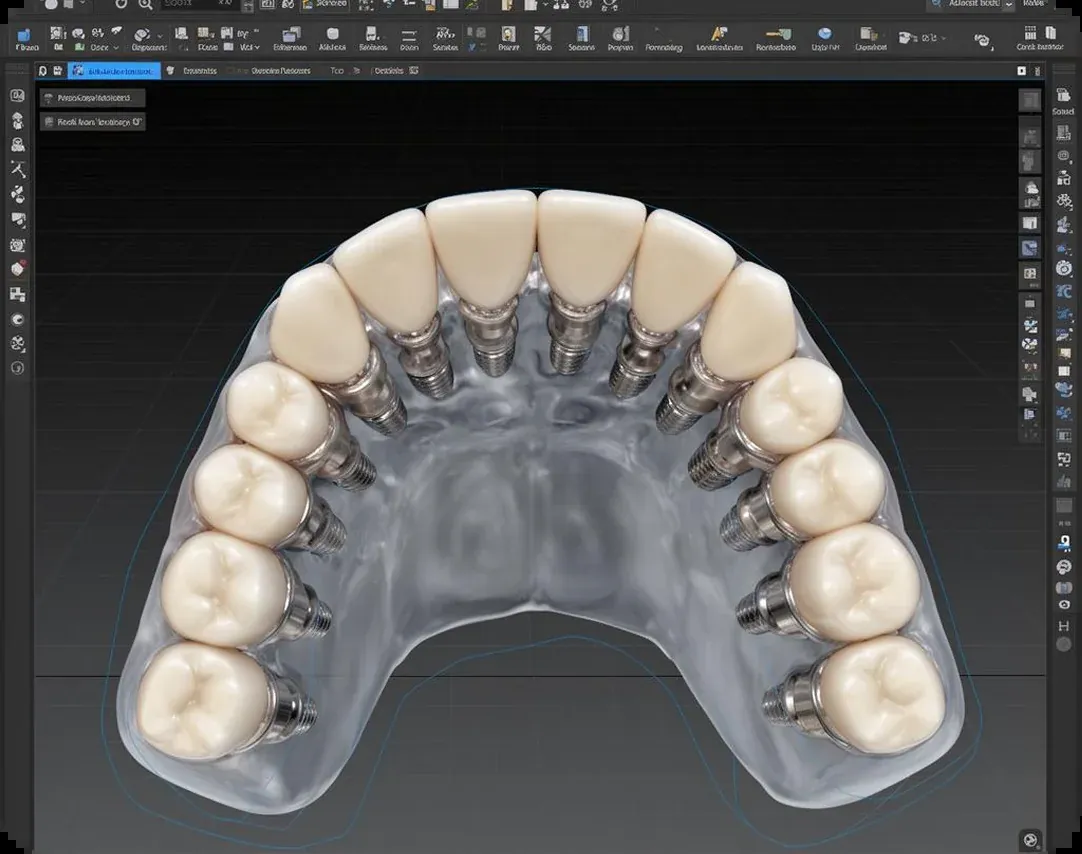
Most implants go into the jawbone. A subperiosteal implant sits on top of it, beneath the gum (the periosteum is the tissue covering the bone). Posts come through the gum to hold a bridge of fixed teeth.
Old idea, new technology
Subperiosteal implants were used decades ago, made from impressions taken during surgery, and the results were unpredictable. Today they're designed digitally from a CBCT scan and 3D printed in titanium to fit your bone precisely. That has brought them back as a real option for a small group of patients.
Who they suit
- People with severe bone loss who can't have, or don't want, extensive grafting
- People who aren't candidates for zygomatic or pterygoid implants
- Some people whose previous implants or grafts have failed
Who they're not for
For most people, conventional, tilted or zygomatic implants are still the better choice, with more long-term evidence behind them. Dr. Ali Mehdi recommends a subperiosteal implant only where it's the most sensible option.
The treatment
- A CBCT scan and digital planning
- The framework designed and made for your jaw
- Surgery to fit it, usually under IV sedation
- Often, temporary teeth fixed soon after
- The final bridge once the tissues have healed
Dr. Ali Mehdi has advanced training in custom subperiosteal implant rehabilitation.
Keep reading
Related questions
- 01Not enough bone for implants?Grafting, sinus lift, tilted and zygomatic implants
- 02Zygomatic implants in BCWhen the upper jaw has too little bone for regular implants
- 03Failed All-on-4: rescue and revisionLoose, broken or failing full-arch bridges
- 04A second opinionFor anyone unsure about a treatment plan they were given
Find out what's possible for you
A consultation with Dr. Ali Mehdi starts with your scans and your goals, and ends with a clear plan you understand.