

For dentists · Clinical guide
When to refer an implant case: a checklist
Knowing which cases to keep and which to refer protects your patients, your schedule and your peace of mind.
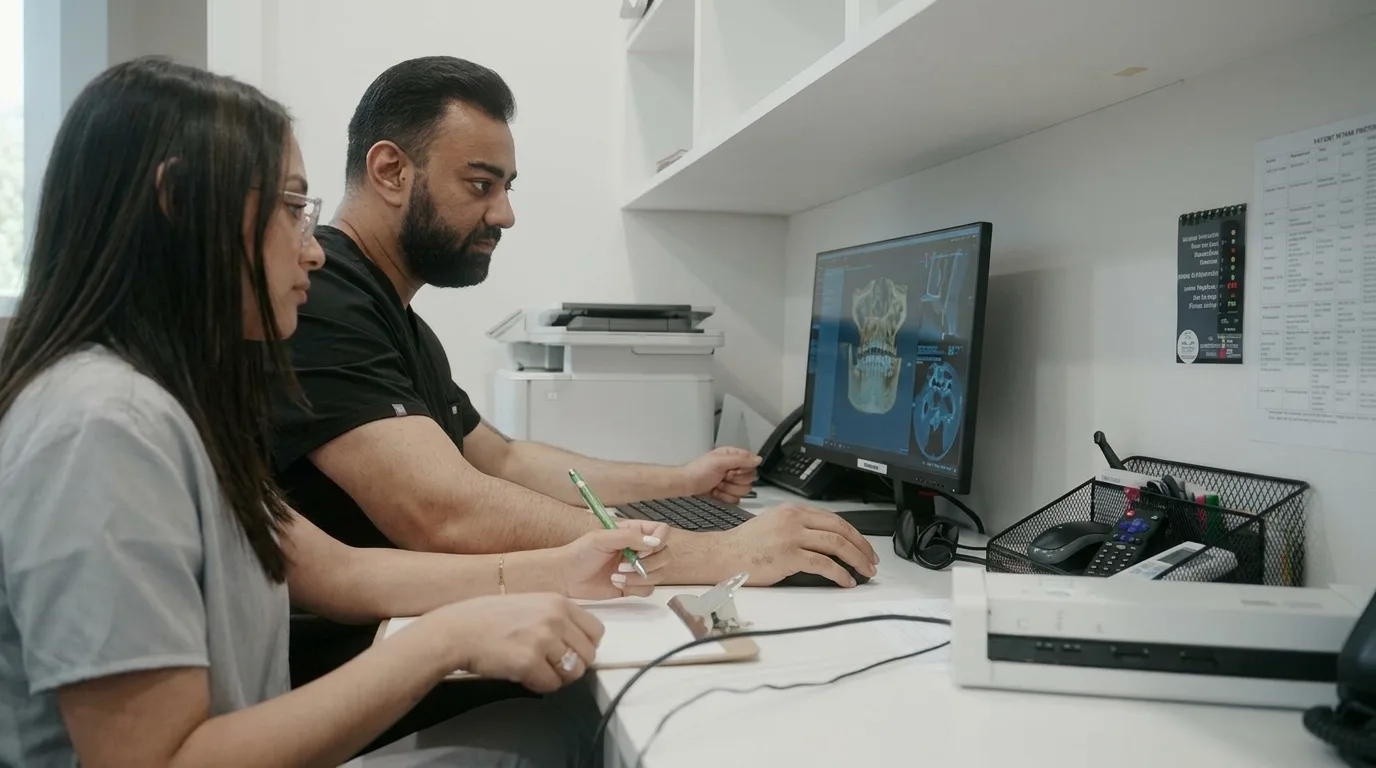
Implant dentistry is within the scope of many general dentists, and most single, straightforward implants can be done well in general practice. The skill is recognising early the cases that carry more risk than you're comfortable managing. Use this checklist at the planning stage, before the patient is in the chair.
Bone volume
- Less than about 6 mm of usable bone width, or not enough height for an implant of adequate length
- A defect that will need more than a small graft at placement: horizontal or vertical augmentation, block grafting, ridge split
- A thin or concave ridge in the aesthetic zone
The sinus
- Less than about 5 mm of bone under the sinus floor where an implant is needed
- Septa, a thickened membrane, or signs of sinus disease on the CBCT
- Any case needing a lateral window sinus lift
Anatomy and nerves
- Limited distance to the inferior alveolar nerve or mental foramen; an anterior loop
- Lingual concavities in the posterior mandible
- Proximity to the incisive canal or nasal floor
Medical history
- Antiresorptive therapy (bisphosphonates, denosumab), especially intravenous
- History of head and neck radiation
- Uncontrolled diabetes, immunosuppression, bleeding disorders or anticoagulation that needs managing
- Heavy smoking
- A patient who needs IV sedation
Full-arch
- Any All-on-X or full-arch case, at least until you have a trained team and a few supervised cases
- Severe atrophy that may need zygomatic or pterygoid implants
- Failing full-arch implant work
The aesthetic zone
- A high smile line, thin biotype, or loss of the buccal plate
- Immediate placement in the anterior maxilla
- Multiple adjacent missing anterior teeth
Complications and rescue
- Peri-implantitis with significant bone loss
- A malpositioned implant, nerve symptoms or a displaced implant
Referral isn't the only option
For cases at the edge of your comfort, consider planning help or chairside mentorship: you keep the patient and build your skills with an experienced surgeon beside you.
Send it anyway. Dr. Ali Mehdi will review the records and tell you honestly whether it suits your practice, needs mentorship, or is best referred.
Keep reading
Related guides
A complex case on your schedule?
Send the records. Dr. Ali Mehdi reviews them and you stay part of your patient's care from start to finish.