

For dentists · Clinical guide
FP1, FP2, FP3: full-arch prostheses and how they shape planning
Misch's classification describes what the final prosthesis replaces. Deciding it first decides almost everything else.
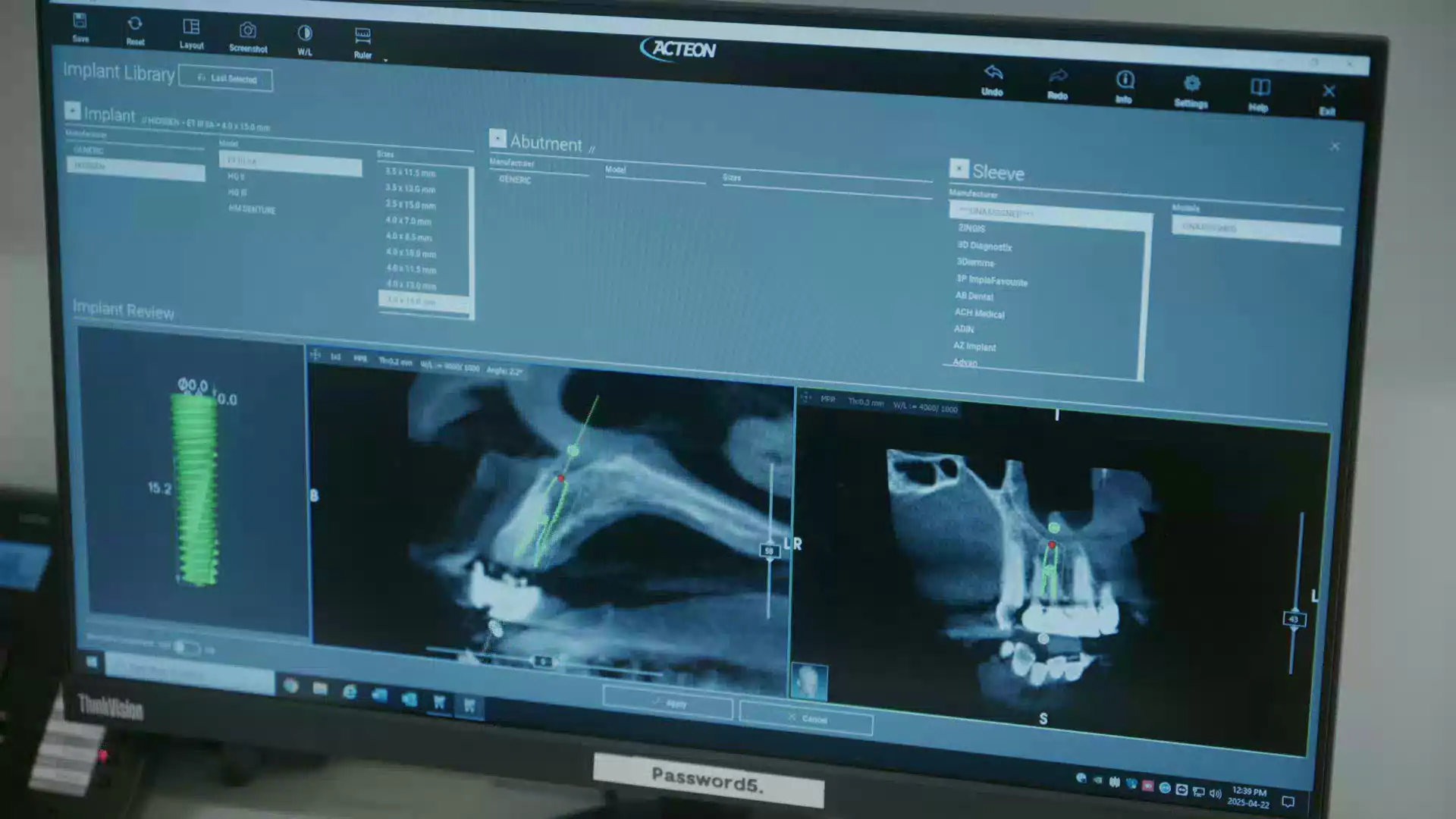
Full-arch implant prostheses are classified by how much they replace: crowns only, crowns and some root, or crowns with gingiva. The classification (Misch) matters because it determines bone reduction, implant position, the transition line, the materials and the hygiene design. It should be decided at the start of planning, never discovered at the end.
FP1: crowns only
The prosthesis replaces only the anatomic crowns. It looks like natural teeth emerging from the gum, so it needs ideal hard and soft tissue: minimal bone loss, ideal implant positions, and usually grafting and careful soft-tissue work. It's demanding and suits few full-arch patients, typically those with little prior bone loss.
FP2: crowns plus part of the root
The teeth look longer than normal because some bone and tissue have been lost. It's acceptable when the patient's smile line doesn't show the cervical area. Implant positions still need to suit the teeth, since there's no pink material to hide compromises.
FP3: crowns plus gingiva
The prosthesis replaces teeth and pink gingival tissue. This is the most common design for All-on-X, especially after resorption or alveolectomy. It allows ideal tooth proportions regardless of bone level, and gives freedom in implant position.
Why the decision comes first
- Restorative space: FP3 needs enough vertical space for the framework, the pink and the teeth, typically around 15 mm or more from the platform to the occlusal plane, which often means bone reduction
- The transition line: in FP3, the junction between the prosthesis and the gum must be hidden above the high smile line in the maxilla
- Implant positions: FP1 needs implants exactly under the teeth; FP3 tolerates more variation
- Hygiene: the intaglio must be convex and cleanable, with access for brushes and floss
- Phonetics and lip support, especially in the maxilla
Assess before you plan
Smile line, lip support, the amount of bone and tissue lost, and the patient's expectations decide between FP1, FP2 and FP3. Photos, a smile analysis and a diagnostic set-up or a scan of the existing denture should come before the surgical plan.
Removable implant prostheses are classified separately (RP4 and RP5).
Keep reading
Related guides
- 01AP spread in All-on-4 planningWhat it is, why it matters, tilted implants
- 02Immediate loading for full-arch casesWhen it's appropriate, primary stability, temporaries
- 03Full-arch complicationsFractures, screw loosening, peri-implantitis, prevention
- 04Surgical guide design serviceSingle, multiple and stackable All-on-X guides
A complex case on your schedule?
Send the records. Dr. Ali Mehdi reviews them and you stay part of your patient's care from start to finish.