

For dentists · Clinical guide
PRF in implant surgery: uses and protocol
Platelet-rich fibrin is an autologous concentrate prepared chairside from the patient's own blood, used to support soft and hard tissue healing.
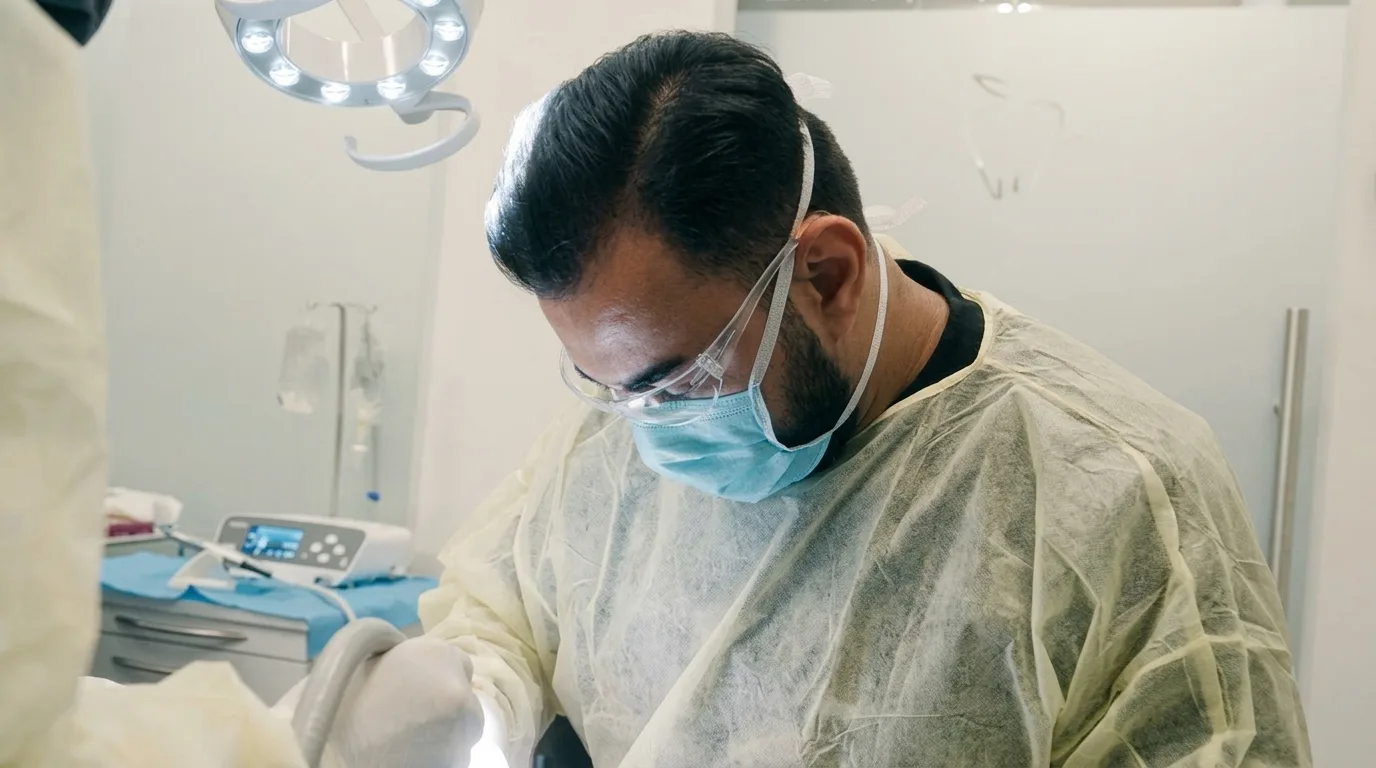
What PRF is
Platelet-rich fibrin is made by centrifuging a small sample of the patient's blood without anticoagulants. The result is a fibrin matrix rich in platelets, leukocytes and growth factors, released gradually as it remodels. Being autologous, it's biocompatible and inexpensive.
Forms
- Membranes: compressed clots, used to cover grafts, sockets and sinus perforations, or to support soft-tissue closure
- Plugs: for extraction sockets
- Injectable PRF (i-PRF): liquid, collected before it clots; used to bind particulate graft into "sticky bone" or injected into tissues
Common uses
- Extraction sockets and ridge preservation
- Mixing with bone graft in GBR and sinus lifts
- Covering and protecting grafts and membranes
- Repairing small Schneiderian membrane perforations
- Supporting soft-tissue healing and comfort
Protocol overview
- Venipuncture, usually from the antecubital fossa, with the patient seated comfortably
- Draw into the correct tubes (plastic or glass-coated for solid PRF, plastic for i-PRF) and centrifuge immediately
- Spin at the settings for your centrifuge and protocol (low speed for i-PRF, longer for solid PRF)
- Separate the clot from the red layer, then compress into membranes or plugs
- Use promptly, keeping everything sterile
Evidence
Evidence supports PRF for soft-tissue healing and comfort, and as an adjunct in socket preservation and grafting. It's an adjunct, not a substitute for sound surgical technique or a barrier membrane where one is needed.
Dr. Ali Mehdi runs hands-on workshops in PRF: venipuncture, preparation and integration with grafts.
A complex case on your schedule?
Send the records. Dr. Ali Mehdi reviews them and you stay part of your patient's care from start to finish.